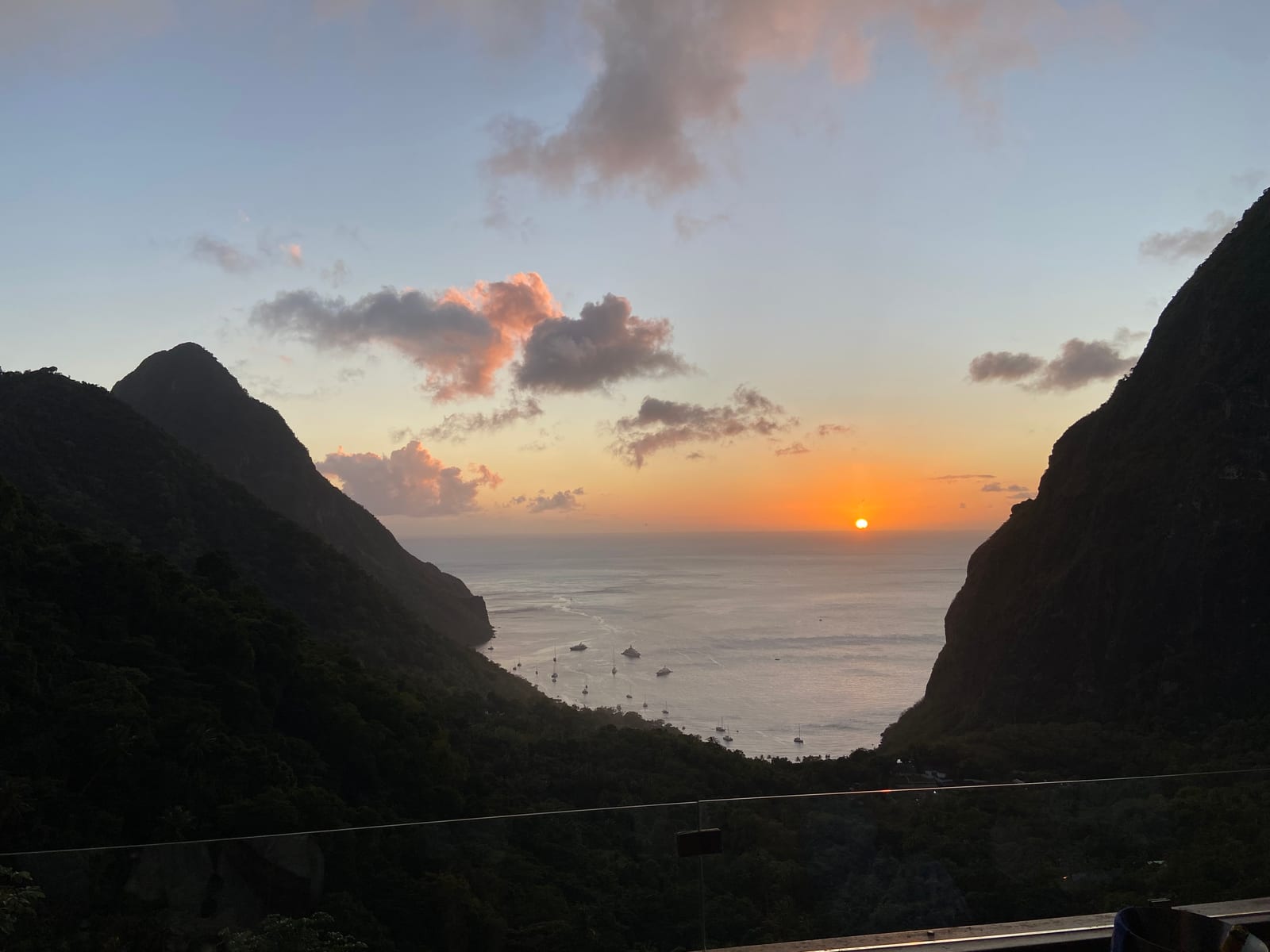
Soufrière and the Pitons, Saint Lucia2026
Saint Lucia
Four days under the Pitons on a cacao estate, from a floating breakfast to a sulfur-springs soak, a sunset sail, and dinner on the ridge.

Lay of the Land
Lay of the Land
Must Do's
Activities
Events
Must-Eats
Where to Stay
Budget
Time Range
When to Go
Logistics
Splurges
Wishlist
Resources
St. Lucia is a wonderful option if you’re considering a warm-weather getaway for the middle of winter. With direct flights from the East Coast that are reasonably priced (compared to every other Caribbean destination), it is also somewhat accessible in that regard, but no less of a gem. A UNESCO World Heritage site, the Pitons are ancient volcanic mountains that rise thousands of feet directly out of the ocean — some of the beaches (as you’ll see below) are truly astounding because of this prominence. Flying into St. Lucia, you also get the immediate sense that it has not (yet) been overrun by commercialization, which is an added plus.
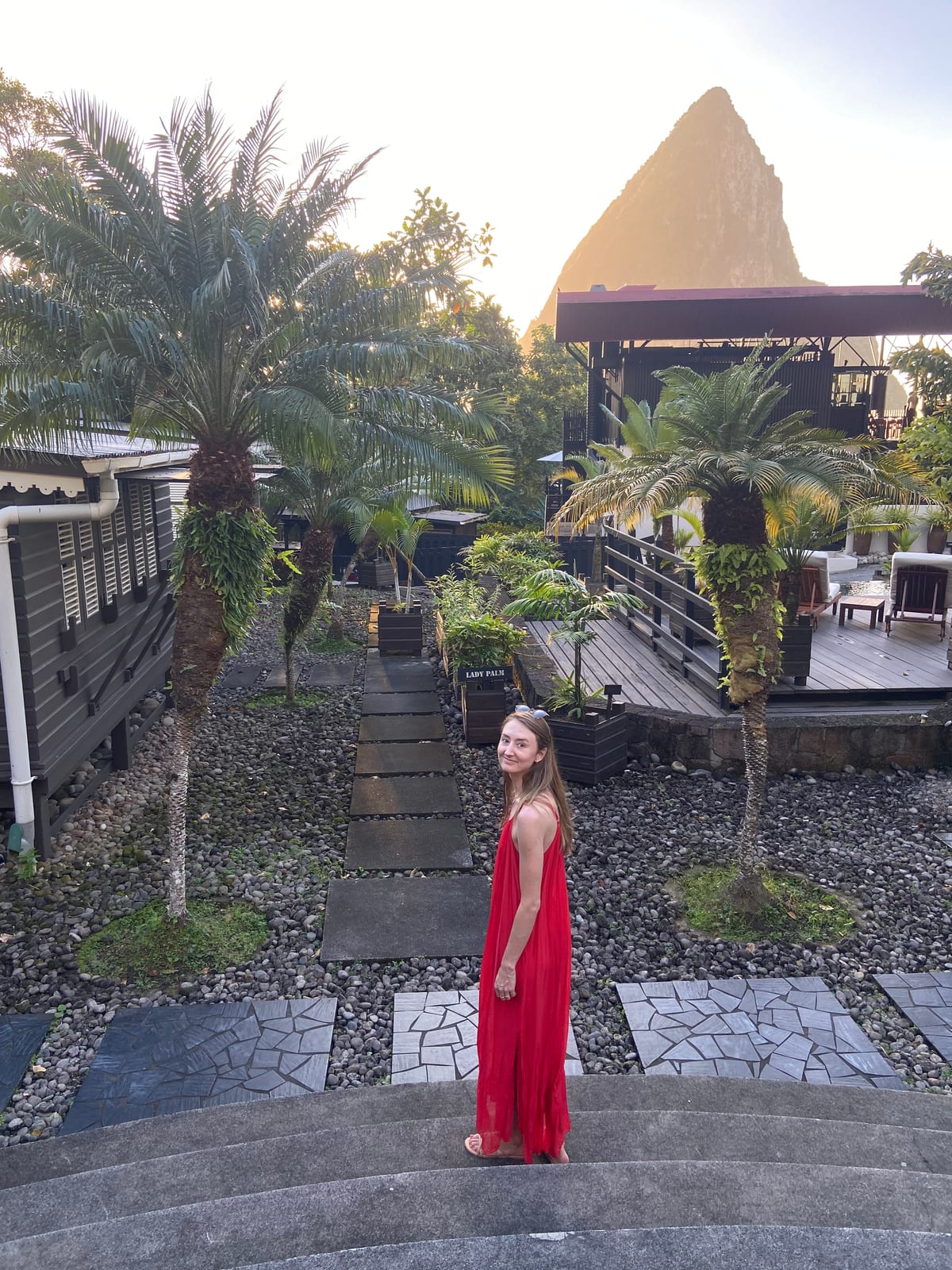
Map & Itinerary
The whole southwest on one map, under the Pitons. Switch to Day by day or Areas to follow the route, or stay on Map and switch the lens to Must-dos, Where to Stay, Eats, Activities, or a custom layer like Beaches, Swim spots, On foot, and Splurges.
Opens our Google Maps list of every spot in this guide. Tap the save icon to add the whole list to your own Maps.
Places on the map
- Soufrière, Soufrière, Saint Lucia — The old French capital, tucked under the Pitons where the rainforest meets the bay. A working town more than a resort strip, and the better for it. Base yourself here and everything in the southwest is a short, winding drive away.
- Rabot Hotel, Rabot Estate, Soufrière, Saint Lucia — A small cacao-estate hotel on a hillside above Soufrière, with open-air rooms looking straight at the Pitons and an infinity pool over the trees. Cacao runs through everything here, from the spa oil to the bar. The base for the whole trip.
- Rabot Restaurant, Rabot Estate, Soufrière, Saint Lucia — The estate's main restaurant, cacao woven through the menu, with the infinity-pool terrace where breakfast can be floated out to you on a tray with the Pitons behind. The everyday table of the trip.
- The Cacao Bar, Rabot Estate, Soufrière, Saint Lucia — The estate's bar, all things cacao from the cocktails to the dessert flights. A good spot for a slow night and a few hands of cards after dinner.
- Project Chocolat, Rabot Estate, Soufrière, Saint Lucia — Hotel Chocolat's tree-to-bar experience on the Rabot cacao estate. They walk you through the farm where the cacao trees grow, explain how a pod becomes a bar, and then have you roast, grind, and pour your own chocolate to take home. Touristy in the best way, and the chocolate is genuinely good.
- Rainforest Picnic, Rabot Estate, Soufrière, Saint Lucia — A packed lunch set up out in the cacao rainforest on the estate, all quiet and green and a little damp. The hotel arranges it; a lovely slow hour between the bigger outings.
- Big Nature View Hike, Rabot Estate, Soufrière, Saint Lucia — A short estate trail, about 45 minutes, up to a clearing with a wide-open view of the Pitons and the sea. Just let the front desk know before you set off.
- Sulfur Springs, Soufrière, Saint Lucia — The island's drive-in volcano, a steaming, sulfurous bowl with warm mud baths you can soak in. Touristy and worth it. Go early, rinse the mud in the cool stream after, and do not wear anything white.
- Diamond Falls Botanical Gardens, Soufrière, Saint Lucia — A mineral waterfall stained orange and purple by the volcanic springs, set in old botanical gardens with warm baths once built for French royalty. An easy, pretty couple of hours in town we never fit in.
- Petit Piton, Soufrière, Saint Lucia — The sharper of the two volcanic plugs that define this coast, rising straight out of the sea above Malgretoute and Sugar Beach. You do not climb this one; you just keep looking at it.
- Malgretoute Beach, Soufrière, Saint Lucia — A quieter dark-sand beach at the foot of Petit Piton, with local boats pulled up and easy snorkeling off the rocks. Less polished than Sugar Beach, and all the better for a slow day.
- Sugar Beach, Val des Pitons, Soufrière, Saint Lucia — A pale crescent of imported sand sitting in the saddle between the two Pitons, the most photographed stretch of coast on the island. The resort owns the back of it, but the beach itself is public. Come for the morning swim, before the day boats.
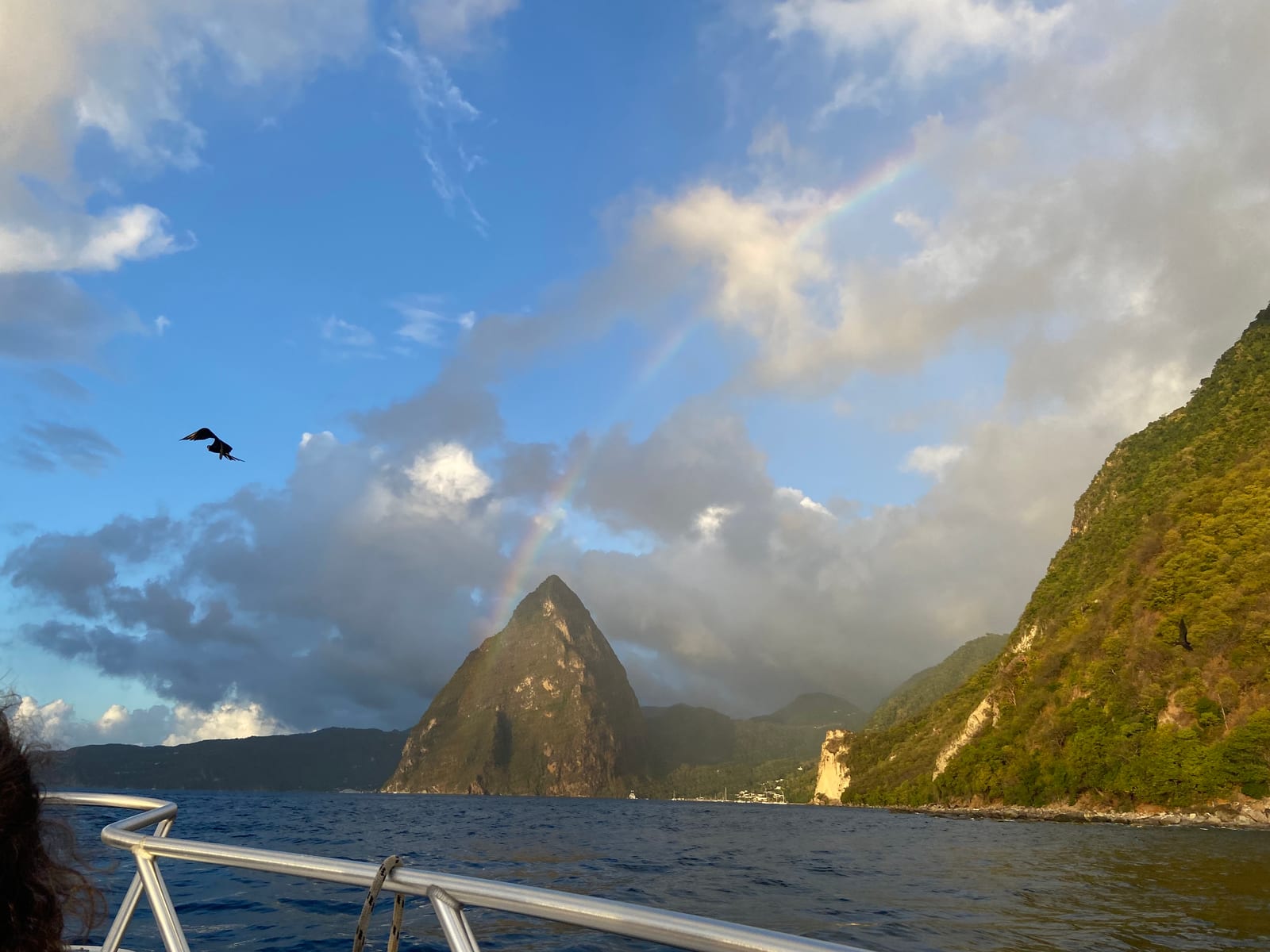
- Boucanier Sunset Cruise, Soufrière Bay, Saint Lucia — A late-afternoon sail along the Piton coast with a beach pickup, drinks aboard, and the sun going down behind the peaks on the way back in. The pick of the on-water options.
- Ladera Resort, Val des Pitons, Soufrière, Saint Lucia — A celebrated open-wall resort on the ridge between the two Pitons, each room missing its fourth wall so the view is the room. We did not stay here, but ate at its restaurant, Dasheene; if Rabot is full, this is the obvious alternative.
- Dasheene at Ladera, Ladera Resort, Soufrière, Saint Lucia — The open-walled restaurant at Ladera, hung on the ridge directly between the two Pitons. Worth booking for sunset; the view does most of the work and the food keeps up.
- Tet Paul Nature Trail, Chateau Belair, Soufrière, Saint Lucia — A short, easy ridge walk with the best view of the Pitons you can get without climbing one. Forty-five minutes, gentle, and the payoff is the so-called stairway to heaven at the top. Good for an afternoon when the legs are tired.
- Gros Piton, Fond Gens Libre, Saint Lucia — The taller of the two peaks, climbed from the village of Fond Gens Libre with a local guide. Four hours up and back through forest, steep near the top, with the whole southwest coast laid out at the summit. Start at first light, before the heat.
- Anse Chastanet, Anse Chastanet Road, Soufrière, Saint Lucia — A dark-sand cove north of town with a reef that starts a few strokes from shore. Some of the easiest good snorkeling in the Caribbean, straight off the beach. The road in is rough, so most people arrive by water taxi from Soufrière.
- Marigot Bay, Marigot Bay, Saint Lucia — A deep, hurricane-hole bay halfway up the west coast, ringed by palms and yachts, that we only ever drove past. Lunch on the water and an afternoon swim is the plan for next time.
- Pigeon Island, Pigeon Island National Landmark, Gros Islet, Saint Lucia — A causeway-linked headland at the north end with two small beaches and the ruins of a British fort to climb for the view back down the coast. A full day up north we never made room for.
- Saint Lucia Jazz & Arts Festival, Pigeon Island and islandwide, early May — The island's flagship festival, a week of live music in early May, from world-class jazz, R&B, and soul headliners to homegrown acts, with the marquee shows historically staged out on Pigeon Island. The event to build a spring trip around.
- Saint Lucia Carnival, Castries, mid-July — The island's biggest party, mid-July — soca, steel pan, and feathered mas bands parading through Castries over two days, with weeks of fetes and calypso in the run-up. Hot, loud, and a blast if your dates line up.
- Jounen Kwéyòl (Creole Day), Rotating communities islandwide, late October — The finale of Creole Heritage Month, on the last Sunday of October — whole communities turn out in madras dress for Kwéyòl food, music, and language, with the main celebration rotating among towns each year. The most authentic cultural day on the calendar.
Day-by-day itinerary
- Day 1: Arrive, the estate. Fly JFK to Hewanorra (UVF) (8:00am); Airport transfer to Soufrière; Check in at Rabot Hotel; Medium massage with cacao oil (4:00pm); Dinner and cards at The Cacao Bar (7:00pm).
- Day 2: On the estate. Floating breakfast at the infinity pool (8:30am); Project Chocolat tour (10:00am); Sugar Beach (12:45 - 3:30pm); Boucanier Sunset Cruise (4:15 - 7:00pm); Dinner at the hotel (7:30pm).
- Day 3: Beaches and the Pitons. Breakfast (8:00am); Big Nature View hike; Malgretoute Beach (10:00am - 4:00pm); Dinner at Ladera (Dasheene) (6:00pm).
- Day 4: Springs, fly home. Sulfur Springs (9:00 - 10:00am); Hotel pool (10:00am - 1:30pm); Shower and check out; Fly Hewanorra (UVF) to JFK (5:30pm).
Must Do’s
The Pitons, although very steep, are a must do. We suggest the Gros Piton Nature Trail. The beaches around St. Lucia’s southwest are also fantastic; try Sugar Beach (although it is a private resort, you can still access the beaches here). Do note you will need to hire a driver to make it down to the beach, as the roads are very tricky and steep. If you can, find a good sunset tour (lots of the resorts offer these), as, given the on-and-off rain that seems constant in the Soufrière region (the rainforest in the southwest of the island), there is a high chance you will see rainbows from the cruise. Lastly, the sulfur springs, although very muddy, are well worth the touristy nature and the foot traffic to experience, and the tour of the cocoa farm at Hotel Chocolat is also a wonderful time.
Activities
Floating breakfast in the pool, massages at the Hotel Chocolat spa, a rainforest picnic, the sunset cruise, Sugar Beach, the Piton hike, Sulfur Springs, and the Project Chocolat cocoa farm tour by Rabot Estate. Most of these were organized by our hotel, Hotel Chocolat. We really loved the cocoa farm tour and Sugar Beach.
Events
We were only on the island four days and did not time our trip around anything, but St. Lucia’s calendar is worth planning around if your dates are flexible. The three biggest, spread across the year: the Saint Lucia Jazz & Arts Festival in early May, Carnival in July, and Jounen Kwéyòl — Creole Day — on the last Sunday of October.
Must-Eats
You can eat very well without leaving the estate. Rabot Restaurant is the everyday table, cacao running through the whole menu, and The Cacao Bar is the spot for a nightcap and a few hands of cards. The one meal worth leaving for is Dasheene at Ladera, the open-walled room that hangs directly between the two Pitons, booked for the view.
Where to Stay
Our stay on St. Lucia revolved around the Hotel Chocolat estate, an active cocoa farm with thousands of acres given over to the trees that eventually produce the main ingredient in a chocolate bar. The best part of the experience was the rooms themselves: outdoor showers (from inside the room), fully open-air accommodations, and a serene setting. If you do stay at Hotel Chocolat, book through the Michelin Guide, which seems to come at a slight discount from their direct site. The hotel also has a huge array of activities it makes very easy to book (sunset cruises, hikes, massages at the on-site spa, and so on). A comparable experience, right across the road, is Ladera Resort, which sits on the side of the mountain overlooking both Pitons and has a truly outstanding view. If you are feeling like a splurge for a few days, book a room at Sugar Beach, where the private on-beach villas are the definition of luxury. Just know it is by far the most expensive of the three — comfortably double a night at Hotel Chocolat or Ladera, and often more. We did not stay at either Ladera or Sugar Beach ourselves, but they are the two we would look at first next time.
One thing worth knowing: Hotel Chocolat and Ladera both sit up in the rainforest, and the elevation matters. They stay close to room temperature, with on-and-off rain more or less constantly, where resorts down nearer sea level run warmer, into the 80s, with far less rain. Pick the climate you actually want before you pick the view.
Budget
Caribbean vacations in the middle of winter are not cheap, and this is no exception, though it is better than a lot of what you will find on the surrounding islands up and down the Antilles. Expect to spend about $500 to $700 a night for the hotel; add dinner, activities, and the rest, and you will run up to about $1,000 a day on the ground. Stay at a top-notch five-star place like Sugar Beach and you will easily double that, or more.
Getting there
- Flights (2)
- $800
- Uber to JFK
- $100
- Airport transfers (to/from)
- $160
On the ground
- Rabot Hotel
- $1,645
- Sunset cruise
- $300
- Rainforest picnic
- $130
- Afternoon tea
- $70
- Massages
- $400
- Dinners and lunches
- $500
Per couple, four days, based on the Rabot cacao estate. The Michelin Guide rate is a small but real discount on the room.
Where to Stay
- ★ Rabot Hotel
- About $550 a night (Michelin Guide rate)
Activities
- ★ Project Chocolat
- About $40 (tree-to-bar experience)
- ★ Boucanier Sunset Cruise
- About $300
- ★ Sulfur Springs
- About $10 entry
Time Range
There is only so much variety to a Caribbean island, and St. Lucia actually seems to have more than most around it, with the Pitons and the rainforest. We felt four days was a really great duration, visiting over a long weekend in the middle of winter, although we could easily have stayed a couple more. Longer than a week seems like a stretch here, unless you are really good at disconnecting and enjoy multiple repeat-style days.
When to Go
You can go any time of year, as the climate is tropical and does not really change. Generally speaking, summer is the cheapest, with less US tourism in those months, and winter is the most expensive, when most people want a warm-weather getaway.
Logistics
Most major East Coast metros (including NYC) have direct flights to St. Lucia, and these are your best bet. Once you land, getting around is via hired car or taxi almost exclusively. Most resorts offer transfer services to and from the airport, and it really is best to take these, even if they are expensive, for the peace of mind on a tropical getaway. If you are staying at one of the hotels mentioned here, it is a solid 40 minutes of driving to arrive.
- Getting there
- Direct flights from most East Coast metros (including NYC) land at Hewanorra (UVF) in the south; about 40 minutes by car to the Soufrière hotels.
- When to go
- Tropical year-round, so any time works. Summer is cheapest (less US tourism); winter is the priciest, peak warm-weather-getaway season.
- Getting around
- Hired car or taxi once you land. Most resorts run airport transfers — worth taking for the peace of mind, even at a price.
Splurges
Most of this trip was a splurge in general, but if we really wanted to go big we would have stayed at one of the Sugar Beach villas. Nestled between both Pitons, Petit and Gros, the view is impeccable, the beach is gorgeous, and the food is very, very tasty.
Wishlist
Two stops up the coast we never made room for: Pigeon Island, with its old fort and beaches, and Marigot Bay, the yacht-filled cove halfway up the west side. First on the list for next time.
-
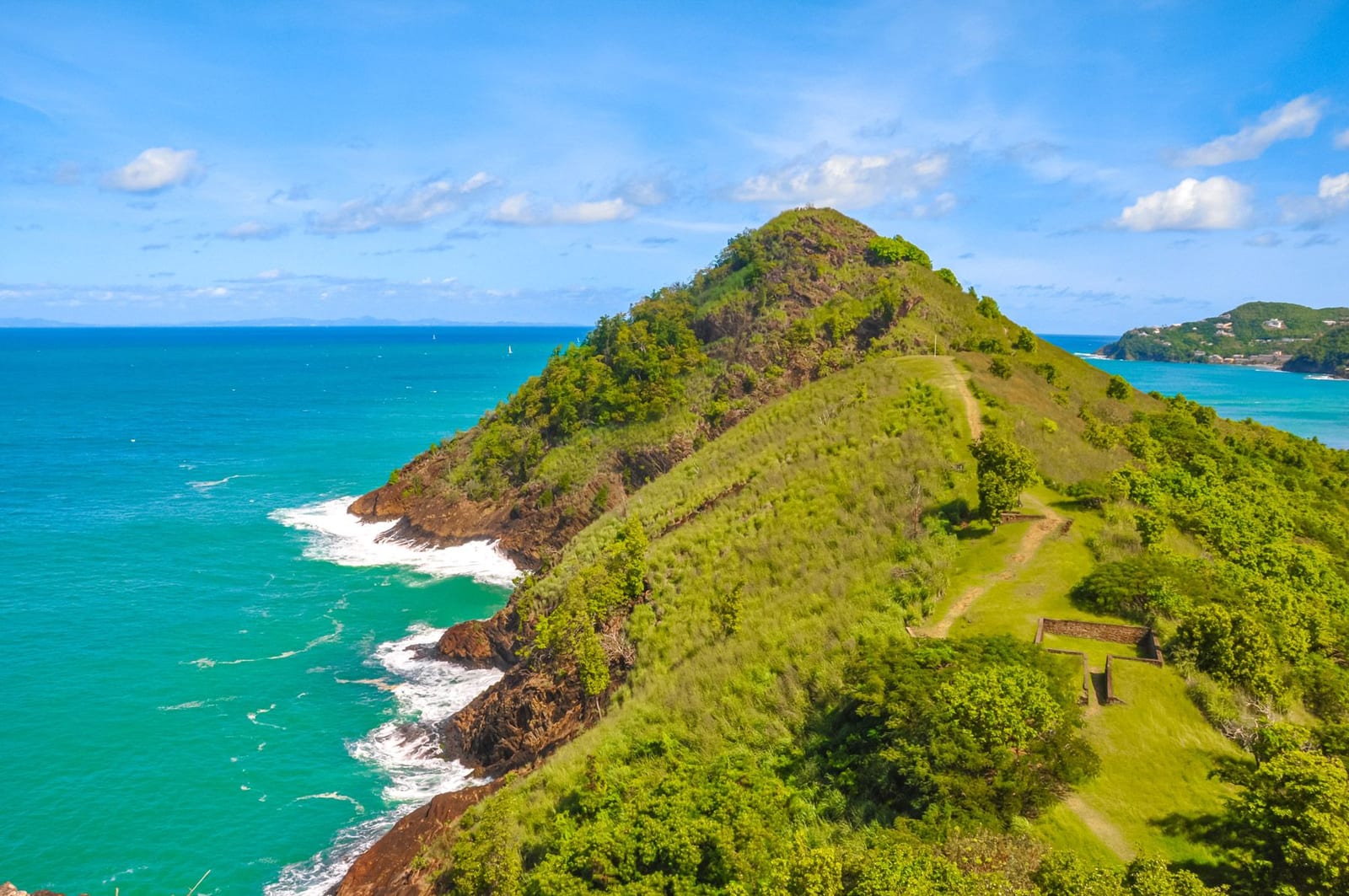
Pigeon Island
Climb an 18th-century British fort for a panorama down the whole coast, between two calm swimming beaches.
Wish We Had Time
-
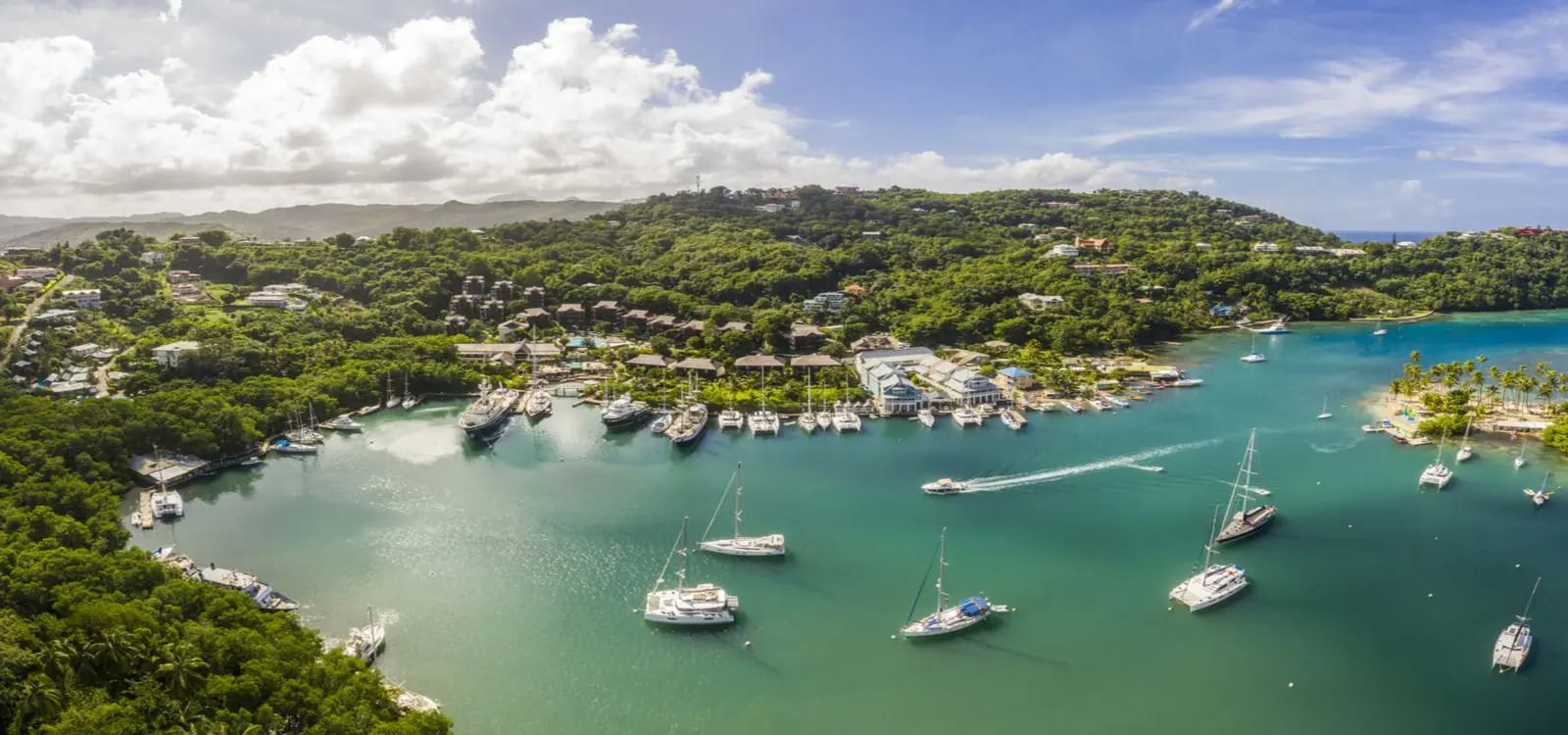
Marigot Bay
A palm-ringed hurricane-hole cove once called the prettiest bay in the Caribbean — waterfront lunch and a swim off the yachts.
Wish We Had Time
Resources
Below are the resources we leaned on putting this together. You may find some useful for your own version — and if you can, try to time a trip around the Jazz Festival in May.
- Saint Lucia visitor information Entry requirements, seasons, and getting around.
- Rabot Hotel (Hotel Chocolat) The cacao-estate hotel we based at; book direct or via the Michelin Guide for the rate.
- Rabot Hotel Spa The on-site cacao spa; book the cacao-oil massage ahead.
- Project Chocolat The tree-to-bar experience on the estate; book a slot ahead.
- Soufrière Foundation Sulfur Springs, Tet Paul, and the local sites near town.
- Saint Lucia Jazz & Arts Festival Early May; worth building a trip around if your dates line up.
Saint Lucia in early summer is sun, sea, and a little hiking. This was our list.
Camera
- Two film cameras
- Film, at least two rolls
Sun
- Sunscreen
- Hats
- Sunglasses
On your feet
- Sneakers for hiking
- Flip-flops for the beach
For the water
- Swimsuits
Gallery
How many days do you need in St. Lucia?
Four days over a long weekend is a great fit for the Soufriere and Pitons area, and you could easily add a couple more. Longer than a week is a stretch unless you are happy with repeat beach days.
When is the best time to visit St. Lucia?
Any time — the climate is tropical year-round. Summer is cheapest with fewer US tourists; winter is peak season and the most expensive. The Soufriere rainforest gets on-and-off rain that clears fast in any season.
Is St. Lucia expensive?
Plan on about $1,000 a day on the ground for two — roughly $500 to $700 a night for lodging, plus dinners and activities. It is better value than many nearby Caribbean islands, though a five-star like Sugar Beach can easily double that.
How do you get around St. Lucia?
By hired car or taxi. Fly into Hewanorra (UVF) in the south, about 40 minutes from the Soufriere hotels. Most resorts run airport transfers, and they are worth taking for the peace of mind even at a price.
What are the must-do things in St. Lucia?
The Gros Piton hike, the southwest beaches like Sugar Beach in the saddle between the Pitons, a sunset catamaran sail, the drive-in Sulfur Springs mud baths, and the tree-to-bar cocoa tour at Hotel Chocolat's Rabot Estate.
Where should you stay in St. Lucia?
We based on the Hotel Chocolat cacao estate above Soufriere, with open-air rooms and Piton views. Ladera is a comparable ridge-top option, and Sugar Beach is the beachfront splurge — by far the priciest of the three. Rainforest stays run cooler and wetter than sea-level resorts.